體研所109(1)學期博士班學科綜合考試(資格考) 參考書目與考試公告
體研所109-1學期博士班資格考參考書目與考試公告
|
日期 |
109年 12月2日(三) |
109年12月3日(四) |
||||||
|
應試時間 組別 |
120分鐘 180分鐘 |
9:00~11:00 9:00~12:00 |
180分鐘 |
14:00~17:00
|
180分鐘 |
9:00~12:00 |
120分鐘 240分鐘 |
14:00~16:00 14:00~18:00 |
|
運動教育組 (賴美芬) |
體育教師專業與發展 180分鐘 |
體育課程 180分鐘 |
奧林匹克與運動教育 180分鐘 |
非營利體育組織 120分鐘 |
||||
|
休閒管理組 (吳志揚) |
運動觀光 120分鐘 |
大型運動賽會管理 180分鐘 |
運動組織經營管理 180分鐘 |
運動行銷 240分鐘
|
||||
其他注意事項:
-
考試相關用品請考生自備(如手錶、文具用品…等) 。
-
請自備茶水,中午可協助代訂便當(請於應試當天上午10點前登記)。
-
請確實遵守考試規則,考試時不可擅自離開座位,違者該科以不及格論。
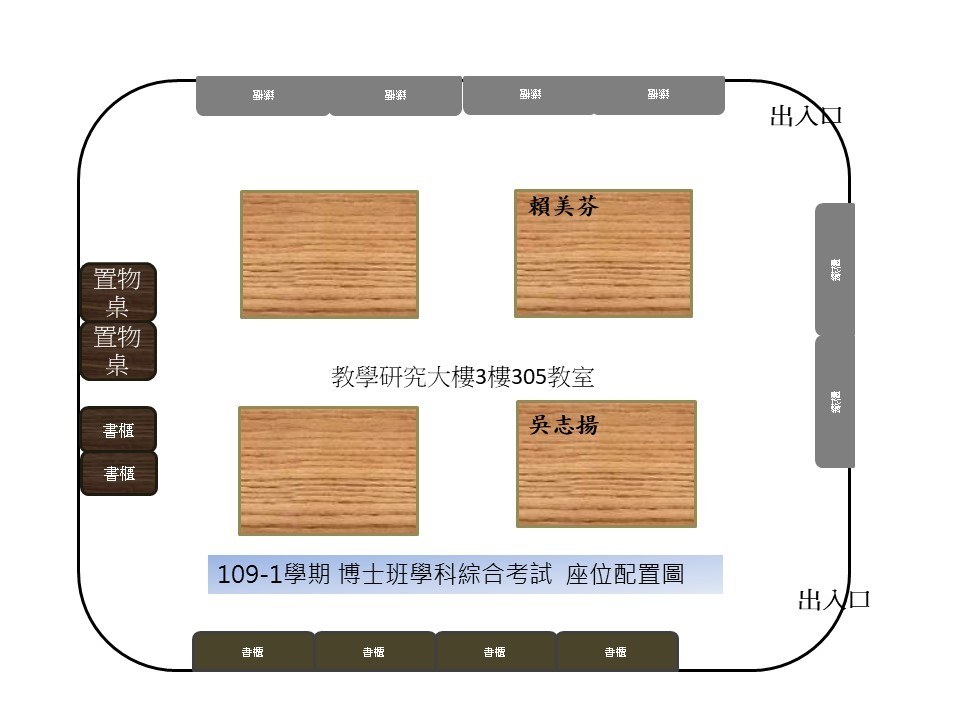
(僅依委員提供之資訊公告,但命題不限於所列參考書目)
- 運動教育組
|
科目 |
參考書目 |
|
|
運 動 教 育 組 |
體育教師專業與發展 180分鐘 可開書 紙本作答 |
最新出版的運動教育、教師專業發展期刊 Journal of Teaching in Physical Education (Human Kinetics) Quest (Human Kinetics) Research Quarterly for Exercise and Sport (Human Kinetics) Physical Education and Sport Pedagogy European physical education review 大專體育學刊 體育學報 中華體育季刊 台灣運動教育學報 |
|
體育課程 180分鐘 可開書 紙筆作答 |
近三年中外運動教育學專業期刊 大專體育學刊 中華體育季刊 體育學報 台灣運動教育學報 Research Quarterly for Exercise and Sport Journal of Teaching in Physical Education Physical Education and Sport Pedagogy European physical education review |
|
|
奧林匹克與運動教育 180分鐘 可開書 紙筆作答 |
體育學報 (中華民國體育學會) 大專體育學刊 (中華民國大專院校體育總會) 台灣運動教育學報 (中華民國運動教育學會)
延伸閱讀(中外運動教育學專業期刊) Journal of Teaching in Physical Education (Human Kinetics) Journal of Physical Education, Recreation, and Dance (AAHPERD) Quest (Human Kinetics) Research Quarterly for Exercise and Sport (Human Kinetics) 以及其他各相關的網站 |
|
|
非營利體育組織 120分鐘 可開書 紙筆作答 |
|
|
- 休閒管理組
|
科目 |
參考書目 |
|
|
休 閒 管 理 組 |
運動觀光 120分鐘 可開書 紙筆作答 |
一、教科書
二、期刊論文
|
|
大型運動賽會管理 180分鐘 可開書 紙筆作答 |
Yeh, K.T. 2013 Mega Sport Management 2nd Edition. Taipei: Farseeing Publisher. Kahle, L. and Close, A. 2011. Consumer Behavior Knowledge for Effective Sports and Event Marketing. NY: New York. Solomon, J. 2002. An Insider’s Guide to Managing Sporting Events. IL: Champaign, Humankinetics. Supovitz, F., 2005. The Sports Event Management and Marketing Playbook. Canada: John Wiley & Sons, Inc. Stotlar, D. 2005, Event Development and Management Additional Readings, CO: University of Northern Colorado. Yeh, K. T. 1997. The Assessment of Economic Impact Studies on Sport-Related Events in North America: A Content Analysis.
(一) 目前我國舉辦國內外大型運動賽會的組織型態、人力資源管理、知識管理、競賽資訊系統、財務管理、永續發展、效益評估,賽後資產管理等問題。 (二) 大型運動賽會結合運動旅遊活動的策略。 (三) 大型運動賽會如何與娛樂(entertainment)效果相結合的策略。 (四) IOC文件(2020Agenda and Olympic Games Knowledge Management [OGKM])。 (五) Important sport event information, including:
|
|
|
運動組織經營管理 180分鐘 可開書 紙筆作答 |
一、組織與領導 Colyer, S. (2000). Organizational culture in selected Western Australian sport organizations. Journal of Sport Management. 14, 321-341. Doherty, A. J., & Chelladurai, P., & (1999). Managing culture diversity in sport organizations: A theoretical perspective. Journal of Sport Management. 13, 280-297. Doherty, A. J., & Danylchuk, K. E. (1996). Transformational and transactional leadership in interuniversity athletics management. Journal of Sport Management. 10, 292-309. Scott, D. K. (1999). A multiframe perspective of leadership and organizational climate. Journal of Sport Management. 13, 298-316. Soucie, D. (1994). Effective managerial leadership in sport organizations. Journal of Sport Management. 8, 1-13. Wallace, M., & Weese, J. M. (1995). Leadership, organizational culture, and job satisfaction in Canadian YMCA organizations. Journal of Sport Management. 9, 182-193. Weese, J. M. (1995). Leadership and organizational culture: An investigation of Big Ten and Mid-American Conference campus recreation administrations. Journal of Sport Management. 9, 119-134. Weese, J. M. (1996). Do leadership and organizational culture really matter? Journal of Sport Management. 10, 197-206.
二、運動組織治理、組織承諾、組織效能與組織公民行為 鄭志富(1998)。體育行政人員工作價值觀與組織承諾之研究。載於鄭志富等著,運動管理學論文選輯(一)(頁3-33)。台北市:師大書苑。 Gerke(2013) The relationship between interorganisational behaviour and innovation within sport clusters. Haggerty, T. R., & Denomme, D. (1991). Organizational commitment in sport clubs: A multivariate exploratory study. Journal of Sport Management. 5, 58-71. Hoye, R., & Cuskelly, G. (2007). Sport governance. Burlington, MA: Butterworth-Heinemann. IOC (2007). Managing Olympic sport organization. Human Kinetics. Joski, P. (1995). Organizational effectiveness of Finnish sport clubs. Journal of Sport Management. 9, 85-95. Slack (1997) Understanding sport organization: The application of organization theory.Human Kinetics. Thomas and Chaiip (1996). Sport governance in the global community. Fitness Technology, Inc.
三、大型運動賽會議題 程紹同(2004)。運動賽會管理-理論與實務。臺北市:楊智文化。 葉公鼎(2013)。大型運動賽會經營管理。臺北市:華都文化。
四、企業社會責任 (Corporate Social Responsibility, CRS) 陳永宏(2001)。談職棒聯盟的社會責任。國立台南大學體育學報,9,134-1。 康峰菁(2010)。企業社會責任的整體認知與實際作為之研究:以台灣服務業為例,企業管理學報,86,75-114。 Burchell, J. & Cook, J. (2006). Confronting the “corporate citizen” shaping the discourseof corporate social responsibility. International Journal of Sociology and SocialScience, 26(3/4), 121-137. Campbell, J. L. (2007). Why would corporations behave in socially responsible ways? An institutional theory of corporate social responsibility. Academy of Management Review, 32(3), 946-967. Carroll, Archie B. (1991), The Pyramid of Corporate social Responsibility: corporate identity, and purchase intention: A dual-process model. Public Relations Review, 17(3), 291-313. Donaldson, T. and Preston, L.E. (1995). The stakeholder theory of the corporation: Concepts, evidence and implications. Academy of Management Review 20(1), 65–91. Enderle, G. (2010). Clarifying the terms of business ethics and CSR. Business Ethics Quarterly, 20(4), 730–732. Hanson, G. (2004). Defining corporate citizenship. Retrieved December 1, from:http://accalliance.asn.au/ACCA_paper_DefiningCorporateCitizenship.pdf. Kolk, A., Pinkse, J. (2006). Stakeholder Mismanagement and Corporate Social Responsibility Crises, European Management Journal, 24(1), 59-72. McWilliams, A. and Siegal, D.,2001,“Corporate social responsibility and financial performance: correlations for misspecification”, Strategic Management Journal, Vol. 21, pp.603-609. McWilliams, A., Siegel, D. (2001). Corporate social responsibility: a theory of the firm perspective. Academy of Management Review, 26, 117-127. Öberseder, M., Schlegelmilch, B. B., Murphy, P. E. (2013). CSR practices and consumer perceptions, Journal of Business Research, 66, 1839-1851. Robertson, T. S., & Gatignon, H. (1986).Competitive effects on technology diffusion, Journal of Marketing, 50(3), 1-12 Welford, R., Chan, C., Man, M. (2007). Priorities for corporate social responsibility: A survey of businesses and their stakeholders. Corporate Social Responsibility and Environmental Management, 15, 52–62. Werther Jr., W. B., and Chandler, D. (2005), “Strategic Corporate Social Responsibility as Global Brand Insurance,” Business Horizons, 48, 317-324. Wood, D.J. Jones, R.E. (1995). Stakeholder mismatching: A theoretical problem in empirical research on Corporate Social Performance. The International Journal of Organizational Analysis 3(3), 229–267. Zeigler, E. F. (2007). Sport management must show social concern as it develops tenabletheory. Journal of Sport Management, 21(3), 297-318.
The websites related to the impacts of COVID-19 on international/national/professional sport industries or organizations.
其他上課老師提供以及同學報告相關資料 |
|
|
運動行銷 240分鐘 可開書 紙筆作答 |
|
|